
Texas philanthropist on Trump’s nonprofit cuts: ‘It’s devastating’
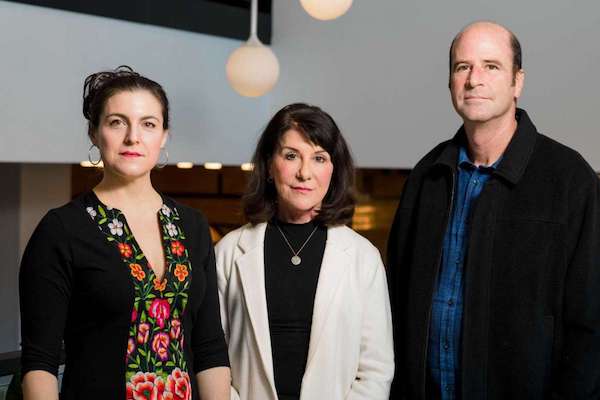
Katherine Lorenz, from left, Sheridan Mitchell Lorenz, and Grant Mitchell of the Cynthia and George Mitchell Foundation. Cynthia and George Mitchell were original signatories of The Giving Pledge.
Katherine Lorenz, the granddaughter of the late philanthropists Cynthia and George Mitchell, has led CGMF since 2011, guiding the foundation's strategic investments in advanced energy, land conservation, water, and other sustainability initiatives across Texas and beyond.
The first six months of the Trump administration have roiled the philanthropic community on the same scale as the COVID-19 pandemic, but funders and nonprofits are finding their feet, the heir to a Texas oil and gas fortune told me recently.
Cuts to foreign aid, scientific research, food programs and health care are forcing family foundations to strategize on how best to support the causes that are important to them, said Katherine Lorenz, the granddaughter of Cynthia and George Mitchell and the president of their philanthropic foundation.
“It’s devastating,” Lorenz told me in an interview. “I think it remains to be seen, in the medium and long term, how philanthropy will respond to this, because it is a complete catastrophic change in how it’s been done.”
Lorenz and I spoke as the U.S. Senate debated government spending over the next decade. In order to pay for trillions of dollars in tax cuts, President Donald Trump and Republicans in Congress slashed spending that allowed nonprofits to address the world’s biggest problems.
“We’re never going to re-create the last 10 years of how philanthropy is being done. We actually need a whole new normal,” Lorenz said. “I’ve thought a lot about, ‘How do you make change when you don’t have such a strong philanthropy and nonprofit sector? ’”
Billionaire George Mitchell is best known for developing the technique of hydraulically fracturing shale to extract oil and gas, known as fracking. He was also an ardent conservationist, responsible for developing The Woodlands Township as an example of sustainable urban design.
Mitchell and his wife, Cynthia, were original members of The Giving Pledge, a community of wealthy people who promise to give away the majority of their wealth during their lifetime or in their wills.
Since 2011, Lorenz has overseen the Mitchell Foundation, which gives away about $20 million a year and hopes to do more. The philanthropy focuses on water, land, clean energy, subsurface energy and sustainability, and education.
“I had about two years between when I started the role and he passed away to spend a lot of time with him understanding what it is he did want, what it was he didn’t want,” Lorenz said.
Building on a legacy
In May, Time magazine named Lorenz one of the nation’s top 100 leaders in philanthropy. Editors recognized her leadership of the Next Gen Giving Pledge, which brings together more than 300 heirs of people from around the world who signed the Giving Pledge.
The Mitchells provided a strategic vision for the foundation, but they left the tactics to their heirs to work out. They had 10 children and 27 grandchildren, and like any family, Lorenz said, there can be disagreements.
“If you all learn together, you end up more on the same page,” Lorenz said. “So, anytime we’re about to make a really big decision about something, we do a lot of learning together as a family so that we’re kind of coming in with more of a shared base of understanding.”
Philanthropy, like all things, cycles through trends. Lorenz said microfinance was the hot topic when she started working in Oaxaca, Mexico, over 20 years ago. Since then, philanthropists have promoted effective altruism, venture philanthropy, donor-driven projects and trust-based giving as the best ways to do good.
Many people question why billionaires and their descendants get to decide what causes to support and how. Progressives want higher taxes on the wealthy and believe elected officials should redistribute the wealth according to community values.
Conservatives tend to want lower taxes and greater reliance on philanthropists to solve the world’s problems. The Trump administration’s cuts to food, housing and health programs will hurt millions of families.
“Some people might argue that it’s not the role of the government to ensure that everyone has a roof over their head and a meal to eat. But I would like to live in a country where they do,” Lorenz said. “Most Americans have decided, it seems, that that’s not the role we want our government to play… Changing that system is kind of beyond the scope of philanthropy.”
Indeed, voters in the last election chose politicians committed to shrinking government. But it’s not clear voters understood Republicans would cut health insurance for Americans, slash funding for starving babies overseas, and bankrupt arts organizations.
Lorenz said she and her philanthropic peers can’t make up for the government’s cuts.
“It’s not just a matter of ‘write a little bit bigger check this year.’ It is entire organizations disappearing, entire infrastructure being erased,” Lorenz said.
The cuts will hurt more people than most realize.
Award-winning opinion writer Chris Tomlinson writes commentary about money, politics and life in Texas. This column was published originally in the Sunday, July 6, 2025 print edition of the Houston Chronicle.
NEWS
Hide Full Index
Show Full Index
View All News