
George P. Mitchell: The wildcatter who changed energy forever

If you’ve never heard of George P. Mitchell, you’ve definitely felt his impact. Whether you’re filling up your gas tank, turning on a light, or driving through the scenic streets of The Woodlands, you’re standing in the legacy of a man who refused to accept the limits of what was possible.
Mitchell wasn’t your typical Texas oilman, although he shared the grit, determination and willingness to take a gamble on something big. He had the instincts of a wildcatter, but he wasn’t chasing the next gusher in the West Texas oil fields. Instead, he spent decades obsessing over something most in the energy industry dismissed as a fool’s errand – extracting natural gas from shale rock.
For years, it was considered a pipe dream. But George Mitchell was nothing if not persistent. Through sheer determination, scientific innovation, and a deep belief in solving the impossible, he unlocked the secret of hydraulic fracturing, or fracking, revolutionizing America’s energy landscape in the process.
But Mitchell’s legacy goes beyond oil and gas. He was a real estate developer, a champion of sustainable communities, a philanthropist who gave millions to science and education, and a Texas legend whose influence is still shaping the Lone Star State.
Born in 1919 in Galveston, George Phydias Mitchell was the son of Greek immigrants who came to America in search of a better life. His father, Savvas Paraskevopoulos (who later changed his last name to Mitchell to better fit into American society), arrived in the United States with almost nothing and built his own success from the ground up, first as a shoe shiner and later as a successful business owner.
That same scrappy determination ran through young George’s veins. Growing up in a working-class family during the Great Depression, he understood the value of perseverance early on. He helped out with the family business, absorbed his father’s work ethic, and developed a sharp mind for numbers and science.
It was that natural talent that earned him a spot at Texas A&M University, where he pursued a degree in petroleum engineering. He wasn’t just an average student – he excelled, graduating as valedictorian in 1940. It was clear from the start that Mitchell wasn’t going to settle for an ordinary career.
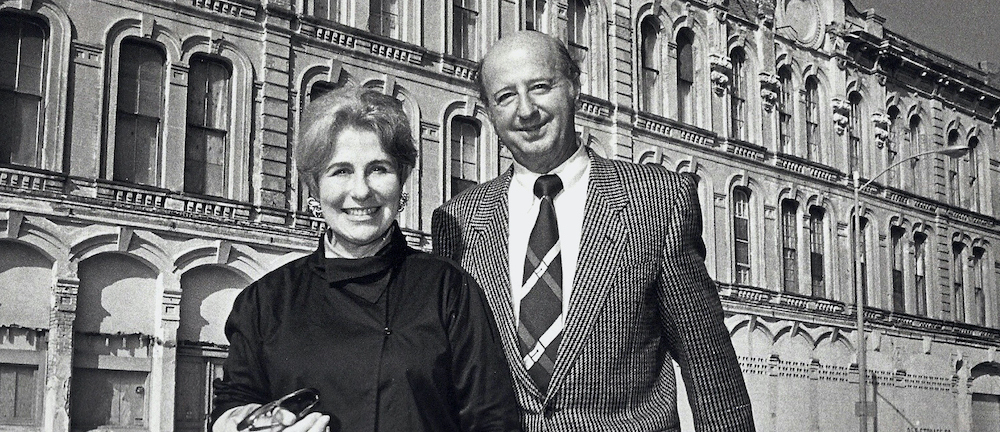
Cynthia and George Mitchell in Galveston | Courtesy The Cynthia and George Mitchell Foundation
Many energy companies had written off shale gas as a waste of time – too expensive, too inefficient, too risky. Mitchell, however, saw potential where others saw failure. He believed that if he could just figure out the right method to extract that gas, it would change everything.
The idea of extracting natural gas from shale formations wasn’t new. Scientists had long known that immense reserves of gas were locked beneath the surface in tight shale rock formations. The problem was how to get it out.
For decades, oil and gas companies had tried and failed. Shale was dense, stubborn and unwilling to give up its riches without a fight. Traditional drilling methods, designed for more porous rock formations, were useless against it. Early attempts at hydraulic fracturing, injecting high-pressure fluid to break open rock formations, had been used to enhance conventional wells but had seen mixed success in shale formations. The process was expensive, unpredictable and widely considered impractical.
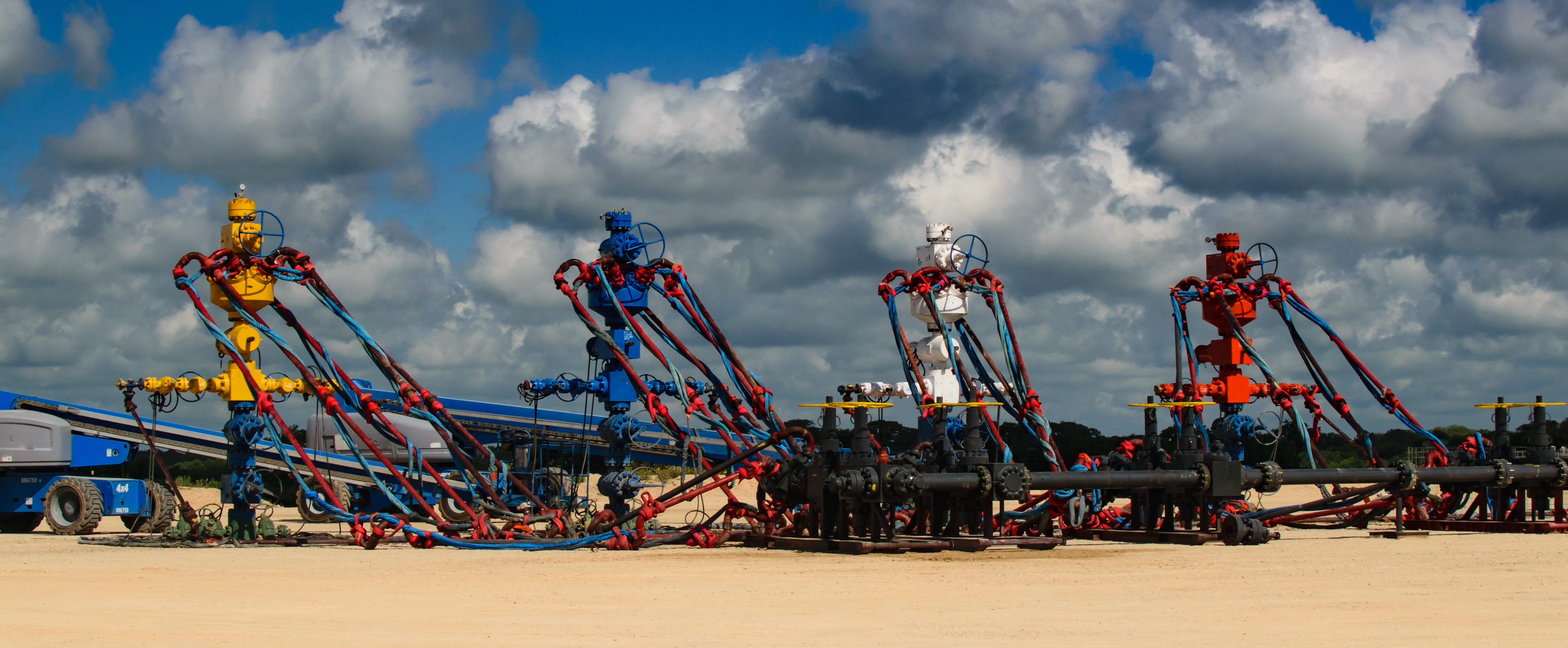
Hydraulic fracturing equipment in the Eagle Ford Shale
By the early 1980s, Mitchell’s company, Mitchell Energy & Development, held drilling rights in the Barnett Shale, a formation in North Texas that geologists knew contained massive gas reserves. But there was one major problem: No one could figure out how to extract the gas in a way that made economic sense. For more than 20 years, Mitchell poured money, research and effort into cracking the shale gas problem. His team experimented tirelessly, drilling test wells and refining their approach well beyond what the industry considered reasonable.
The early results were discouraging. Attempts to fracture the shale rock often failed. Wells produced only small trickles of gas, far too little to justify the drilling expense. Investors started growing impatient. Even Mitchell’s own executives urged him to move on. They saw his fixation on shale gas as a money pit, an expensive obsession that would never pay off. But Mitchell refused to give up. Where others saw an impossible challenge, he saw an engineering puzzle that hadn’t been solved yet.
After years of frustration, Mitchell’s team finally had a breakthrough in the late 1990s. The key wasn’t just hydraulic fracturing – it was combining it with horizontal drilling. Traditional wells had always been drilled vertically, tapping into whatever gas they could reach directly beneath the surface. But by drilling down and then horizontally, engineers could expose miles of shale rock to the fracturing process, allowing vastly more gas to escape.

Mitchell looked at the way most suburban developments were built with neighborhoods thrown together with little connectivity, no regard for green space, and a focus on short-term profit over long-term livability. He saw an opportunity to do things differently. Instead of a typical suburban development, Mitchell envisioned a fully integrated, master-planned community, one where homes, businesses, parks and natural landscapes could exist in harmony. He believed that suburban sprawl didn’t have to come at the cost of nature. People could live and work in the same place without sacrificing the beauty of their surroundings.
It was an ambitious, almost radical idea. No one had ever built a suburban community quite like this in Texas. But, as with shale gas, Mitchell was never afraid to challenge conventional thinking. In 1974, Mitchell founded The Woodlands, a planned community 30 miles north of Houston, designed to be a self-sustaining “city in the forest.” Unlike the generic subdivisions popping up across America, The Woodlands was designed with walkability, conservation and a sense of community in mind.
From the start, Mitchell took a different approach to development. Instead of leveling the land to make room for houses and roads, he designed the community around the existing landscape. Creeks, wooded areas and natural waterways were preserved, not destroyed. The goal was to create a city where people could live without disconnecting from nature. This new community was planned to include extensive greenbelts and parks; a network of walking and biking trails; a balance of residential, commercial and recreational spaces; and innovative stormwater management and conservation efforts.

Mitchell developed The Woodlands. opening in 1974, and recognized internationally as the first master-planned sustainable community.
Mitchell poured his own personal fortune into making The Woodlands a reality. At the time, real estate developers thought he was crazy – why invest so much in conservation when he could have built more homes and made more money? But he wasn’t interested in quick profits; he was playing the long game. He believed The Woodlands could be a model for the future, proving that development and sustainability weren’t mutually exclusive.
Despite his enormous business success, Mitchell never forgot his roots. He remained deeply committed to giving back, investing millions into education, scientific research and sustainability efforts.
A major donor to Texas A&M University, he funded research in engineering and energy sustainability, ensuring future generations of Texans would continue to innovate in the fields he helped shape. He also supported scientific research into sustainability and alternative energy, even as his legacy was tied to oil and gas. He believed in responsible energy use and in finding ways to balance industry and environmental responsibility.
NEWS
Hide Full Index
Show Full Index
View All News